High-performance tablets are excellent for yoga beginners, offering smooth app performance and vibrant displays for guided sessions. The best choices balance power, portability, and screen quality for an immersive and stress-free practice.
Thinking about starting your yoga journey but feeling overwhelmed by tech choices? You’re not alone! Many beginners wonder if a tablet can truly enhance their practice. The good news is, with the right device, it absolutely can. Imagine following along with clear video tutorials, accessing calming music, and even tracking your progress – all on a portable screen.
But with so many tablets out there, how do you choose one that’s powerful enough for yoga apps but still easy on your wallet and your mind? Don’t stress! We’re going to break down exactly what makes a tablet great for new yogis. Get ready to discover how a solid tablet can make your journey into yoga smoother, more enjoyable, and more effective.
Why a High-Performance Tablet is Your Best Yoga Buddy (Even for Beginners!)

When you’re just starting out with yoga, the last thing you need is a device that glitches, freezes, or has a screen that makes it hard to see your instructor. That’s where a “high-performance” tablet comes in. Don’t let the term intimidate you! For yoga beginners, it simply means a tablet that:
- Runs apps smoothly: Yoga apps can sometimes be quite demanding, especially those with high-definition videos or interactive features. A higher-performance tablet ensures these apps load quickly and run without stuttering. This means you won’t miss a crucial pose cue because your tablet is lagging behind.
- Has a great display: Clear visuals are super important in yoga. You need to see the instructor’s form precisely. A tablet with a bright, high-resolution screen makes it easier to follow along, whether you’re doing a quick stretch break or a full flow session.
- Offers good battery life: You don’t want your tablet dying halfway through your Savasana. A decent battery ensures you can complete your practice without interruption.
- Is portable: Yoga can be done anywhere – your living room, a park, or even a hotel room. A tablet is lighter and easier to set up than a laptop, and much more convenient than a desktop computer for on-the-go practice.
Think of your tablet as your personal yoga studio assistant. It’s there to guide you, motivate you, and provide a seamless experience so you can focus on your breath and your poses. For beginners, this smooth, frustration-free experience is key to building a consistent and enjoyable yoga habit.
Essential Features for Your Yoga Beginner Tablet
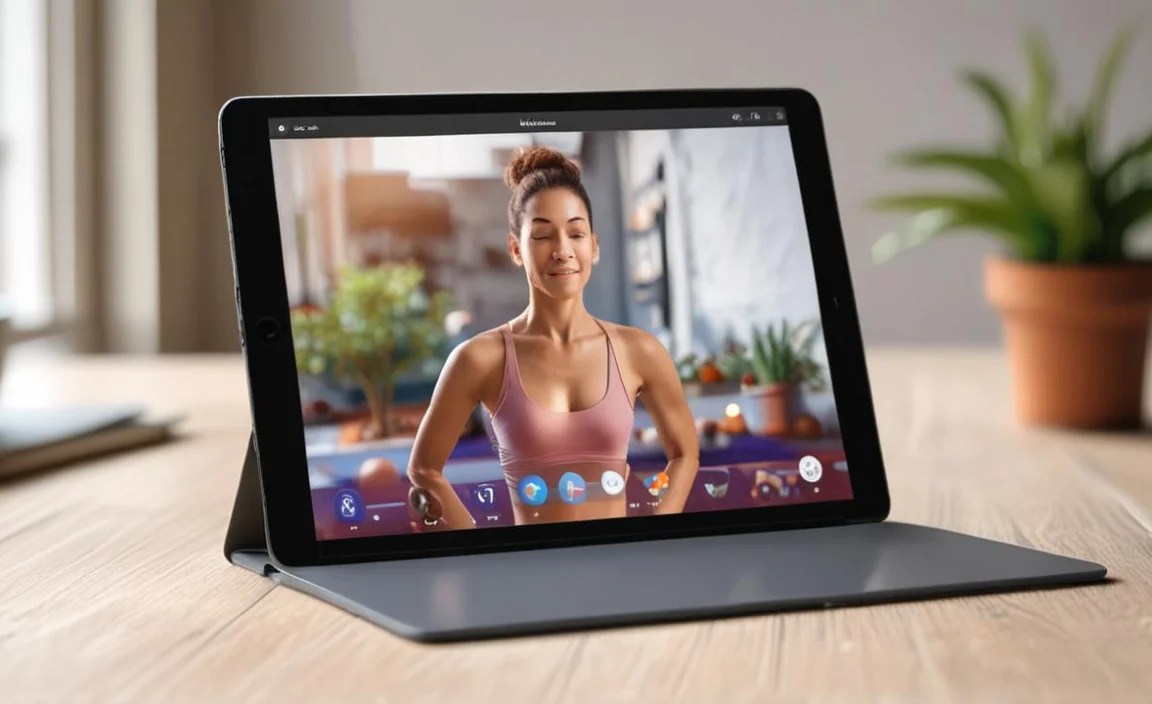
Choosing the right tablet isn’t just about brand names or raw specs. For yoga beginners, a few key features will make the biggest difference in your practice. Let’s break them down:
1. Screen Quality: Clarity is Key
This is probably the most important factor. You’ll be looking at the screen for instruction, so it needs to be clear and easy to see.
- Resolution: Look for tablets with at least Full HD (1920 x 1080 pixels) resolution. This ensures sharp images, making it easy to distinguish subtle movements and alignments. Higher resolutions, like Quad HD or 4K, are even better if your budget allows, offering razor-sharp detail.
- Brightness: If you plan to practice near a window with natural light, or in a well-lit room, a bright screen is essential. Look for tablets with a high nits rating (the unit of measurement for brightness). 400 nits or more is generally considered very good for indoor and outdoor use.
- Color Accuracy: While not as critical as resolution or brightness, good color accuracy makes videos look more true-to-life. This enhances the overall viewing experience.
- Screen Size: A screen size between 10 and 13 inches is ideal for yoga. It’s large enough to see details clearly without feeling cramped, but still relatively portable. Smaller screens can make it harder to follow along, while very large ones might be cumbersome.
2. Performance: Smooth App Experience
A “high-performance” tablet doesn’t need to be a gaming beast, but it does need to handle your yoga apps without a hitch. What does this translate to?
- Processor (CPU): This is the “brain” of the tablet. For smooth operation, aim for at least a mid-range processor from reputable brands like Qualcomm (Snapdragon 600 series or higher), Apple (A-series chips), or Samsung (Exynos chips). These will handle video playback and app multitasking with ease.
- RAM (Random Access Memory): More RAM means the tablet can handle more tasks at once without slowing down. For general use and running yoga apps, 4GB of RAM is a good starting point. 6GB or 8GB will provide a smoother multitasking experience and future-proof your device a bit more.
- Storage: Yoga apps, especially those with downloaded video content, can take up space. Aim for at least 64GB of internal storage. If you plan to store a lot of videos or other media, consider 128GB or more. Many tablets also offer expandable storage via a microSD card, which is a great budget-friendly option.
3. Battery Life: Practice Without Interruption
Nothing breaks your flow more than a device powering down unexpectedly. For your yoga sessions, you’ll want a tablet that can last.
- Hours of Use: Look for tablets that advertise at least 8-10 hours of mixed-use battery life. This should be more than enough to cover multiple yoga sessions, browsing, and streaming without needing a midday charge.
- Fast Charging: While not strictly necessary for performance, fast charging can be a lifesaver. If you realize you forgot to charge your tablet, you can get a significant power boost in a short amount of time.
4. Connectivity: Stay Connected
You’ll likely need to download apps, stream videos, and maybe even attend live virtual classes.
- Wi-Fi: Ensure the tablet supports newer Wi-Fi standards (like Wi-Fi 5 or Wi-Fi 6) for faster and more stable internet connections.
- Optional: Cellular/LTE: If you plan to practice in places without reliable Wi-Fi, or want the freedom to stream anywhere, consider a model with cellular connectivity. This usually comes at a higher cost.
5. Operating System: Your Preferred Ecosystem
Most tablets fall into one of three main categories:
- iPadOS (Apple): Known for its intuitive interface, robust app selection, and excellent performance. If you’re already in the Apple ecosystem (iPhone, Mac), an iPad is a natural fit.
- Android (Google): Offers a wide range of devices from various manufacturers at different price points. Android is known for its customization options and open ecosystem. Samsung, Lenovo, and Amazon Fire tablets are popular choices here.
- Windows: While less common for pure tablet use, some high-performance 2-in-1 devices run Windows and can be used as tablets. These are often better suited for productivity tasks that require traditional desktop software.
For yoga beginners, both iPadOS and Android offer fantastic app stores with plenty of guided yoga sessions and resources. The best choice often comes down to personal preference and your existing tech devices.
Best High-Performance Tablets for Yoga Beginners in [Current Year]
![Best High-Performance Tablets for Yoga Beginners in [Current Year]](https://i2.wp.com/tabletzoo.com/wp-content/uploads/2026/03/best-high-performance-tablets-for-yoga-beginners-in-current-year-2.webp)
Finding the perfect blend of features and price can be tricky. I’ve curated a list of some of the best high-performance tablets that are fantastic for yoga beginners. These offer a great balance of screen quality, performance, and usability.
1. Apple iPad Air (M2 Chip)
The iPad Air is a perennial favorite for a reason. It strikes an amazing balance between performance, portability, and premium feel. The M2 chip ensures buttery-smooth performance, whether you’re streaming HD yoga classes or multitasking.
- Pros: Stunning Liquid Retina display, incredibly fast M2 chip, vast App Store with high-quality yoga apps, excellent build quality, long battery life, Apple Pencil support (sold separately) for note-taking.
- Cons: Can be a bit pricier, Apple Pencil and Magic Keyboard are additional costs.
- Why it’s great for yoga: The combination of the vivid display and powerful chip means you get a fluid, high-definition viewing experience for all your yoga tutorials. Its lightweight design makes it easy to move around your practice space.
2. Samsung Galaxy Tab S9 FE / S9 FE+
Samsung’s “Fan Edition” tablets usually offer a fantastic premium experience at a more accessible price. The Tab S9 FE and FE+ deliver excellent displays and solid performance, making them strong contenders for yoga practitioners.
- Pros: Large, bright displays (up to 12.4 inches on the FE+), good performance with the Exynos processor, S Pen included, IP68 water and dust resistance (a bonus for humid environments!), expandable storage via microSD.
- Cons: Processor might not be as zippy as Apple’s M-series chips for very intensive tasks, but more than sufficient for yoga.
- Why it’s great for yoga: The generous screen size provides an immersive view, and the included S Pen is handy for making notes on your progress or favorite poses. The water resistance offers peace of mind if you tend to sweat a lot or practice in a steamy room.
3. Lenovo Tab P11 Gen 2 / Tab P11 Pro (Gen 2)
Lenovo consistently offers tablets with impressive screens and good value. The Tab P11 series is known for its multimedia capabilities, making classes and guided meditations visually appealing.
- Pros: Excellent OLED displays (on the Pro model), good audio for immersive experiences, decent performance for everyday tasks and streaming, often competitively priced.
- Cons: App store quality might not be as curated as Apple’s, Android updates can sometimes be slower depending on the model.
- Why it’s great for yoga: The vibrant and sharp screens, especially if you opt for the OLED Pro model, make video content pop. They offer a great visual experience for following along with instructors.
4. Amazon Fire Max 11
For those on a tighter budget who still want a capable device, the Fire Max 11 is a surprising powerhouse. It runs on a modified version of Android and integrates seamlessly with Amazon services.
- Pros: Very affordable, reasonably powerful performance for the price, solid 11-inch display, good battery life, Amazon ecosystem integration.
- Cons: Amazon Appstore is more limited than Google Play or Apple App Store (though most major Android apps are available), Fire OS is more locked down than standard Android.
- Why it’s great for yoga: It provides a large, clear screen and adequate performance for streaming yoga videos and using most fitness apps without costing a fortune. It’s a fantastic entry-level option that won’t disappoint for basic yoga needs.
5. Microsoft Surface Go 3 (as a tablet)
While technically a 2-in-1 laptop, the Surface Go 3 shines as a tablet when the Type Cover is detached. It runs full Windows, giving you access to a tremendous range of software and web-based yoga platforms.
- Pros: Runs full Windows, giving access to all desktop software, compact and lightweight design, touch-friendly interface.
- Cons: Can be more expensive when factoring in accessories (Type Cover, Pen), Windows can sometimes feel less optimized for touch than iPadOS or Android on tablets, battery life can be average.
- Why it’s great for yoga: If you plan to use specific Windows-based yoga programs or want the flexibility of a full desktop OS in a tablet form factor, the Surface Go 3 is a solid choice. Its compact size is also a plus for portability.
How to Choose Your Perfect Yoga Tablet: A Step-by-Step Guide

Feeling more confident? Great! Let’s walk through the final steps to picking the tablet that’s right for you and your yoga practice.
Step 1: Set Your Budget
Tablets range from under $200 to well over $1000. Decide how much you’re comfortable spending. This will immediately narrow down your options. Remember, you don’t need the most expensive model for a great yoga experience.
Step 2: Prioritize Screen Size and Quality
As we discussed, this is crucial for yoga. Would you prefer a more compact tablet that’s easy to prop up anywhere, or a larger screen that feels more like a virtual instructor? Aim for at least 10 inches and Full HD resolution.
Step 3: Consider Your Existing Devices
If you already have an iPhone or Mac, an iPad might integrate seamlessly. Similarly, if you’re heavily invested in Google services, an Android tablet could be a natural choice. While tablets are often used independently, ecosystem integration can sometimes simplify things.
Step 4: Check for Essential Apps
Before you buy, do a quick search on your chosen tablet’s app store for yoga apps you’re interested in (e.g., Down Dog, Glo, Peloton Digital, Yoga with Adriene). Ensure they are well-rated and compatible.
As a helpful resource, the U.S. National Library of Medicine provides guidance on choosing reliable health apps, which can be applied to fitness apps as well!
Step 5: Read Reviews Focused on Performance and Display
Once you’ve narrowed down your choices, read or watch reviews specifically mentioning screen brightness, clarity, and how well the tablet handles video playback and everyday app usage. Look for feedback from users who aren’t hardcore tech enthusiasts – their perspective is often the most practical.
Step 6: Don’t Forget Accessories (Optional but Helpful)
Consider if you might want accessories like a good stand to prop up your tablet during practice, a stylus for note-taking, or a protective case. Factor these into your budget if they’re important to you.
Table: Key Yoga Tablet Features at-a-Glance

To help solidify your decision, here’s a quick comparison of the key features we’ve discussed, highlighted for their importance to yoga beginners:
| Feature | Importance for Yoga Beginners | Ideal Specification |
|---|---|---|
| Screen Resolution | High: Essential for clear view of poses and instructor. | Full HD (1920×1080) or higher. |
| Screen Brightness | High: Crucial for visibility in any lighting condition. | 400 nits or more recommended. |
| Screen Size | Medium to High: Balances portability with viewability. | 10 to 13 inches. |
| Processor (CPU) | Medium to High: Ensures smooth app and video performance. | Mid-range to high-end chip (e.g., Snapdragon 600+, Apple A-series). |
| RAM | Medium: For efficient multitasking and app loading. |

Your tech guru in Sand City, CA, bringing you the latest insights and tips exclusively on mobile tablets. Dive into the world of sleek devices and stay ahead in the tablet game with my expert guidance. Your go-to source for all things tablet-related – let’s elevate your tech experience!