Choosing the best tablets for software developers can feel like a coding challenge in itself! Don’t worry, we’ve simplified it. Look for a balance of processing power, screen size, and stylus support for coding, note-taking, and debugging on the go. Our guide helps you find the perfect fit without the overwhelm.
Hey everyone, Walter Moore here from Tabletzoo! Are you a software developer looking for a tablet that can keep up with your coding needs? Maybe you’re tired of lugging a heavy laptop everywhere, or you’re hoping to find a more mobile way to jot down ideas, debug code, or even do some light coding on the fly. It’s a common quest, and honestly, finding the right tablet can feel like searching for a specific bug in a massive codebase – a bit frustrating, right?
Well, take a deep breath! You’ve come to the right place. We’re diving deep into the world of tablets to help you, the developer, find a device that’s not just a pretty screen, but a true workhorse. We’ll break down what really matters, cut through the jargon, and point you towards some fantastic options. Get ready to power up your productivity!
Why Developers Need a Dedicated Tablet
As a software developer, your toolkit is crucial. While a powerful desktop or laptop often takes center stage, a good tablet can be a surprisingly valuable addition. It’s about extending your workspace and creativity beyond the traditional desk setup. Imagine sketching out an app architecture during a coffee break, reviewing pull requests on your commute, or even doing some light scripting while relaxing on the couch. A tablet offers this flexibility.
It’s not just about portability; it’s about different modes of interaction. For some tasks, like brainstorming or making quick annotations on design mockups, a tablet with a stylus can be far more intuitive and faster than a mouse and keyboard. Plus, the app ecosystem on tablets is constantly growing, with more development tools and specialized productivity apps becoming available. Let’s explore why this device deserves a closer look in your professional life.
Key Features Developers Should Prioritize
When we talk about the “best tablets for software developers,” we’re not just looking at the flashiest specs. We’re focusing on what directly impacts your workflow and productivity. Think of these as the essential libraries and frameworks for your tablet choice.
- Processing Power (CPU & RAM): This is your tablet’s engine. For handling multiple apps, running emulators, or compiling smaller code snippets (where possible on a tablet), you’ll want at least 8GB of RAM, and ideally 16GB or more. A powerful processor (like Apple’s M-series chips or high-end Qualcomm Snapdragon/MediaTek chips) ensures smooth multitasking and responsiveness.
- Screen Size & Quality: A larger screen (11 inches and up) is generally better for coding and reviewing documents, as it provides more real estate for text and code. Look for high resolution (QHD or higher) and good color accuracy if you’re involved in UI/UX or design.
- Storage: Developers often deal with large files, project assets, and numerous applications. Aim for at least 128GB of storage, but 256GB or 512GB will offer more breathing room and future-proofing.
- Stylus Support: For note-taking, sketching diagrams, annotating code, or marking up designs, a responsive stylus is a game-changer. Look for tablets that offer precise, low-latency stylus input and consider the cost of the stylus as it’s often sold separately.
- Operating System & App Ecosystem: The tablet’s OS determines the apps you can use. iPadOS offers a robust app store with many professional tools. Android tablets provide more customization and open-source options. Windows tablets, of course, can run full desktop applications, which is a significant advantage for some developers.
- Keyboard Compatibility: If typing is a major part of your tablet usage, a detachable keyboard is essential. This transforms your tablet into a more laptop-like device, crucial for longer coding sessions or extensive writing.
- Battery Life: Working remotely or on the go means you can’t always be near a power outlet. Look for tablets that promise all-day battery life to avoid mid-task power anxiety.
- Connectivity: Wi-Fi 6 and Bluetooth 5.0 or higher ensure fast and stable connections. Cellular (5G/LTE) options are great for developers who work from virtually anywhere.
Top Tablet Picks for Software Developers
Now, let’s get to the exciting part: specific recommendations. We’ve hand-picked a few devices that consistently rank high for performance, versatility, and developer-friendly features. These are the heroes of our guide!
1. Apple iPad Pro (M2/M3 Chip)
The iPad Pro has long been a benchmark for premium tablets, and its latest iterations with the powerful M2 or M3 chips are no exception. It offers desktop-class performance in a portable package.
- Pros:
- Unmatched performance from M-series chips, capable of handling demanding tasks.
- Stunning Liquid Retina XDR display with ProMotion technology for smooth visuals.
- First-class Apple Pencil support (Apple Pencil 2nd Gen or USB-C) with excellent
latency. - Vast and curated iPadOS app store with many professional creative and productivity apps.
- Excellent build quality and ecosystem integration with other Apple devices.
- Magic Keyboard provides a superb typing experience and trackpad.
- Cons:
- Expensive, especially when adding accessories like the Apple Pencil and Magic Keyboard.
- iPadOS, while improving, still has some limitations for true desktop-class development compared to macOS or Windows.
- Storage can get pricey at higher configurations.
Who it’s for: Developers invested in the Apple ecosystem, those who prioritize top-tier performance and display quality, and creatives who need a powerful drawing/note-taking tool alongside coding capabilities. For those doing mobile development (iOS apps), it’s a natural fit. You can find more on Apple’s commitment to performance on their official performance page.
2. Microsoft Surface Pro 9/10
For developers who need a full desktop OS experience, the Surface Pro line running Windows is an excellent choice. It can genuinely replace your laptop.
- Pros:
- Runs full Windows 11, meaning you can install any desktop software (IDEs like Visual Studio, VS Code, Docker, etc.).
- Versatile 2-in-1 design with a detachable, high-quality keyboard cover (Type Cover) and excellent kickstand.
- Optional stylus support with the Surface Pen for note-taking and markup.
- Wide range of configurations available, from Intel Core i5 to i7 processors, and ample RAM/storage options.
- High-resolution PixelSense display.
- Cons:
- Can be more expensive than many convertible tablets, especially with the keyboard and pen.
- Tablet form factor can be slightly less comfortable than a dedicated slate for extended handheld use.
- Battery life can vary significantly depending on usage and configuration.
Who it’s for: Developers who need to run full desktop applications, use specific Windows-based IDEs, or prefer the familiarity and power of a traditional desktop operating system. The ability to run full IDEs is a major draw. You can learn more about the Surface line on Microsoft’s official Surface website.
3. Samsung Galaxy Tab S9/S9+/S9 Ultra
Samsung’s premium Android tablet line offers a fantastic alternative, especially for those who prefer the Android ecosystem or need a larger screen at a potentially better price point than the iPad Pro.
- Pros:
- Beautiful Dynamic AMOLED 2X displays across all models, offering vibrant colors and deep blacks.
- Included S Pen stylus with low latency for enhanced note-taking and sketching.
- Powerful Snapdragon 8 Gen 2 for Galaxy chips provide excellent performance for Android apps and multitasking.
- Samsung DeX mode transforms the tablet’s interface into a more desktop-like experience when connected to a keyboard.
- Available in multiple screen sizes to suit different preferences (S9: 11″, S9+: 12.4″, S9 Ultra: 14.6″).
- Good build quality and IP68 water/dust resistance.
- Cons:
- While DeX is good, it’s not a full desktop OS like Windows or macOS.
- The absolute peak development performance might still lag behind the latest M-series iPads for highly intensive tasks.
- App optimization for tablet-sized screens can still be hit-or-miss on Android compared to iPadOS.
Who it’s for: Android users, developers who appreciate stylus input and a large, high-quality display, and those who want a more versatile device for both productivity and media consumption. Samsung DeX is a significant feature for multitasking. You can explore more on Samsung’s official tablet page.
4. Lenovo Yoga Tab 13
The Lenovo Yoga Tab 13 stands out with its unique roll-cage design and a large, immersive 13-inch display. It’s a solid choice for multimedia and productivity.
- Pros:
- Expansive 13-inch LTPS display with a 2K resolution, offering plenty of screen real estate.
- Built-in kickstand for versatile viewing and placement.
- Good performance from its Snapdragon 870 processor, suitable for most Android apps and multitasking.
- Supports Lenovo’s Precision Pen 2 for creative tasks and note-taking.
- Can function as a secondary display for Windows PCs via a USB-C to HDMI cable, which is a unique bonus for some developers.
- Cons:
- It’s an Android tablet, so it inherits the app ecosystem limitations for professional development.
- Less compact and portable than some other options due to its larger size.
- Battery life is decent but not class-leading.
Who it’s for: Developers who value a large screen for productivity and media, appreciate the flexibility of a built-in stand, and might find the secondary display functionality particularly useful. It offers a compelling immersive experience. Check out Lenovo’s tablet offerings for more details.
5. Google Pixel Tablet
A more budget-friendly and versatile option, the Google Pixel Tablet offers a clean Android experience and smart home integration with its Charging Speaker Dock.
- Pros:
- Smooth performance thanks to the Google Tensor G2 chip, excellent for everyday tasks and Android apps.
- Included Charging Speaker Dock turns it into a smart display and grants easy access to Google Assistant.
- Clean, stock Android experience with timely updates.
- Decent screen quality for its price point.
- More affordable than other premium tablets.
- Cons:
- Stylus is not included and sold separately, adding to the cost.
- Performance is good but won’t match the high-end iPad Pro or Surface Pro for very demanding tasks.
- The tablet experience on Android is still evolving, and professional development tools may be limited to basic editors or cloud-based IDEs.
Who it’s for: Developers looking for an affordable, capable Android tablet for general productivity, note-taking (with an added pen), and leveraging its smart home capabilities. It’s a great secondary device. You can find more information on Google’s official store.
Tablets vs. Laptops for Development Work
This is a question many developers ponder. Can a tablet truly replace or effectively complement a laptop for coding? The answer is nuanced and depends heavily on your specific development tasks and preferences.
When a Tablet Might Shine:
- Mobility and Quick Tasks: Taking notes in meetings, sketching ideas, debugging minor issues, or reviewing code on the go.
- Creative Work: UI/UX design, wireframing, graphic design, and digital note-taking with a stylus are often superior on tablets.
- Light Coding/Scripting: With capable apps like Termux (Android) or a mobile IDE, you can handle many scripting tasks or even some front-end work.
- Presentations and Demos: Easily show off your work or product designs to clients or colleagues.
Where Laptops Still Reign Supreme:
- Full Development Environments: Running complex IDEs (like IntelliJ IDEA, Visual Studio) locally, managing virtual machines or containers (like Docker), and compiling large projects are typically better suited for laptop power.
- Extensive Typing: While tablet keyboards have improved, a dedicated laptop keyboard is usually more comfortable for long coding sessions.
- System-Level Access: Full OS control and command-line access are generally more robust on laptops.
- Performance-Intensive Tasks: Heavy simulations, rendering, or compiling large codebases benefit from the sustained performance and cooling of a laptop.
The Hybrid Approach is often the sweet spot for many developers. A tablet can be an excellent companion, an extension of your primary workstation, rather than a complete replacement. It excels at tasks where portability, touch interaction, and stylus input are beneficial, while your laptop handles the heavy lifting.
Essential Accessories for Developer Tablets
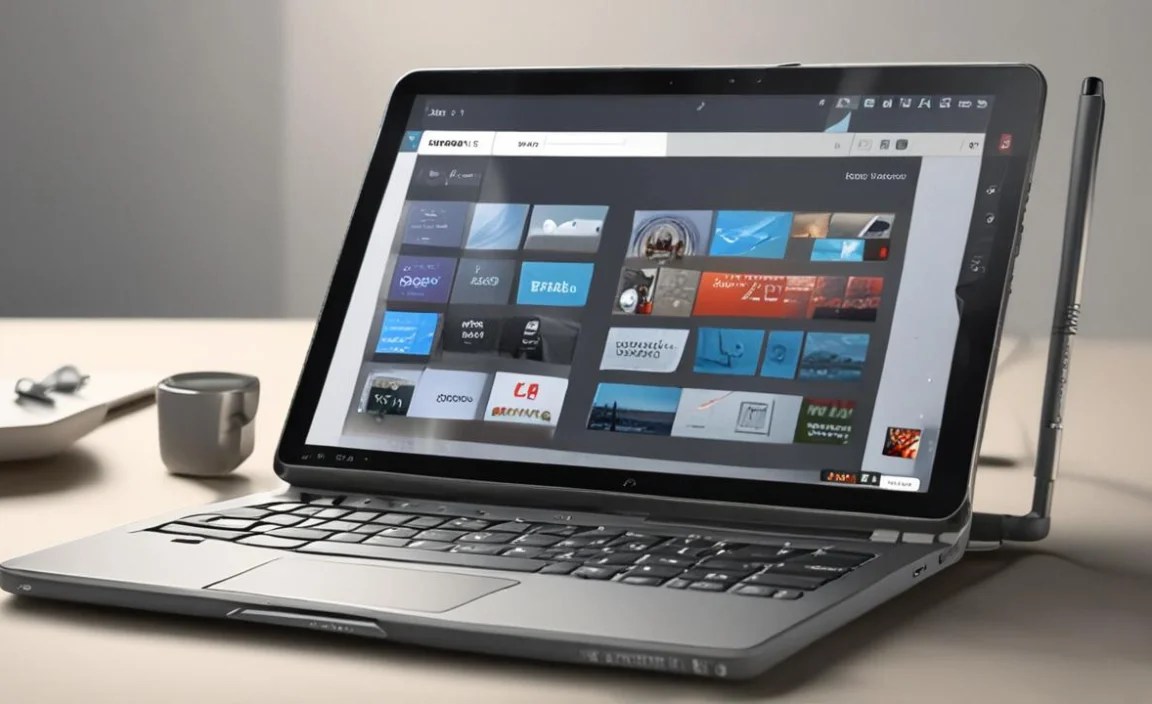
To truly unlock a tablet’s potential for development, accessories are key. Think of these as your essential plugins and extensions.
- Stylus: As mentioned, this is vital for note-taking, sketching, and annotation. Ensure it’s compatible with your chosen tablet.
- Detachable Keyboard: Essential for any meaningful typing. Look for good key travel, backlighting, and a built-in trackpad if possible.
- USB-C Hub/Dock: A lifesaver for expanding connectivity. Allows you to connect external monitors, USB drives, Ethernet, and more to tablets that have limited ports.
- Portable Monitor: For an even more expansive “mobile workstation,” pairing your tablet with a portable monitor can significantly boost productivity, especially for tasks requiring multiple windows.
- Protective Case/Sleeve: Essential for protecting your investment, especially if you’re moving it around a lot.
- Screen Protector: Especially important if you use a stylus heavily, to protect against scratches and improve the feel of writing.
Software and Apps for Developers on Tablets
The software availability is crucial. While you might not run your full IDE on a tablet, there are many powerful apps that support developer workflows.
- Note-Taking & Whiteboarding: Evernote, Notion, OneNote, GoodNotes (iPadOS), Metamoji Note (Android), Nebo. These are excellent for brainstorming, documenting, and sketching diagrams.
- Code Editors (Lightweight/Mobile):
- Android: Termux (provides a Linux environment), Acode, Spck Editor.
- iPadOS: Code Editor by Goobix, Textastic, Swift
Playgrounds (for Swift development).
- Cloud IDEs: Services like GitHub Codespaces, Gitpod, or Replit let you code entirely in the browser, making them fully compatible with any tablet that has a strong web browser and keyboard.
- SSH/Terminal Emulators: Essential for connecting to servers. Examples include Termius, Blink Shell (iPadOS), JuiceSSH (Android).
- Design & Prototyping Apps: Figma (browser-based), Adobe Fresco, Concepts, Procreate (iPadOS).
- Project Management & Collaboration Tools: Jira, Trello, Asana, Slack – all have excellent tablet apps.
The landscape of developer apps on tablets is constantly evolving. Don’t be afraid to explore the app stores and look for tools that fit your specific coding language or framework. For instance, if you’re focusing on web development, a robust browser and a good text editor will get you far.
Common Pitfalls and How to Avoid Them
To ensure your tablet journey is smooth, let’s address some common hurdles developers face:

Your tech guru in Sand City, CA, bringing you the latest insights and tips exclusively on mobile tablets. Dive into the world of sleek devices and stay ahead in the tablet game with my expert guidance. Your go-to source for all things tablet-related – let’s elevate your tech experience!